
Prior Lake Directory Collections Located
No official catalog reviewed names a complete annual Prior Lake historical directory run, a publisher, or the first and last years. That is an important result, not a reason to fill the gap with a neighboring city book. The confirmed Prior Lake collection paths below lead to dated names, addresses, maps, announcements, and directory searches. Ask each repository for the exact volume or microfilm year before treating a source as a Prior Lake historical directory.
| Collection | Years or scope | Where held | Access |
|---|---|---|---|
| Prior Lake American microfilm | 1881, 1916, 1917, 1925, and 1965-2014 listed | Scott County Historical Society | Onsite research or distance request |
| County maps and plats | Maps 1874-1944; plats 1854-1974 in listed holdings | Scott County Historical Society | Appointment is recommended for archives |
| City or telephone directory search | One person or business, up to five years of one city | MNHS Gale Family Library | Staff request, $5 processing fee |
| Local library leads | Exact directory and obituary years not confirmed | Prior Lake Library | Ask staff about directories, yearbooks, and vertical files |
The table separates located material from unconfirmed Prior Lake directory coverage. A request for a Polk book, reverse directory, telephone book, rural directory, school directory, business directory, or obituary index should name a year range. No official source located a reverse-directory run, so do not assume one exists.
Prior Lake Directory Year Gaps
Prior Lake historical directory research works best as a sequence of dated evidence. The Historical Society lists individual newspaper years and a 1965-2014 microfilm span, but the listed gaps are not proof that the paper stopped publishing. Likewise, MNHS holds broad directory resources without confirming a complete Prior Lake run in the source material. Record what was searched, what date range was covered, and whether the result was an index, an image, or a staff reply.
1852 to 1871
Use Spring Lake Village alongside Prior Lake. The village was platted in 1852, surveyed in 1857, and took the Prior Lake name after the railroad arrived in 1871.
1960 and after
The Prior Lake American began weekly publication in October 1960. Its later issues can supply a date-stamped substitute when a directory volume is not located.
1965 to 2014
That is the listed Historical Society microfilm run. It overlaps the city’s growth period, but it is still a newspaper source, not a complete household roll.
For a missing year, ask the Historical Society and Prior Lake Library separately whether they hold a physical directory, telephone book, or local file. The MNHS request is a useful narrow test: select City Directories, Telephone Books, or Both, give one person or business, and limit the request to no more than five years.
Prior Lake’s growth also changes the language worth searching. The city history places limited growth around farming, summer residents, and the Grainwood Hotel in the earlier period, then faster growth after the 1960s. A Pre-1960 Prior Lake name may be attached to a farm, lake cottage, rural route, township, church, or legal description instead of a numbered street. Later Prior Lake material is more likely to include subdivisions, permits, school references, and newspaper coverage. Marking the likely era before requesting a Prior Lake directory substitute saves a great deal of unfocused searching.
Prior Lake Directory Requests and Repositories
The Scott County Historical Society is the primary local stop for a Prior Lake directory question. Its holdings include county and township histories, family files, church registers, cemetery plot maps, obituary and announcement cards, census material, maps, plats, and Prior Lake American microfilm. Give staff spelling variants, estimated years, the city or township, a church or cemetery if known, and every known relative. Ask whether a citation points to a card or index entry, or to a full newspaper or original register image.
Scott County Library’s locations and hours page identifies Prior Lake Library as a nearby access point for staff referral, local newspapers, databases, scanning, and genealogy leads.
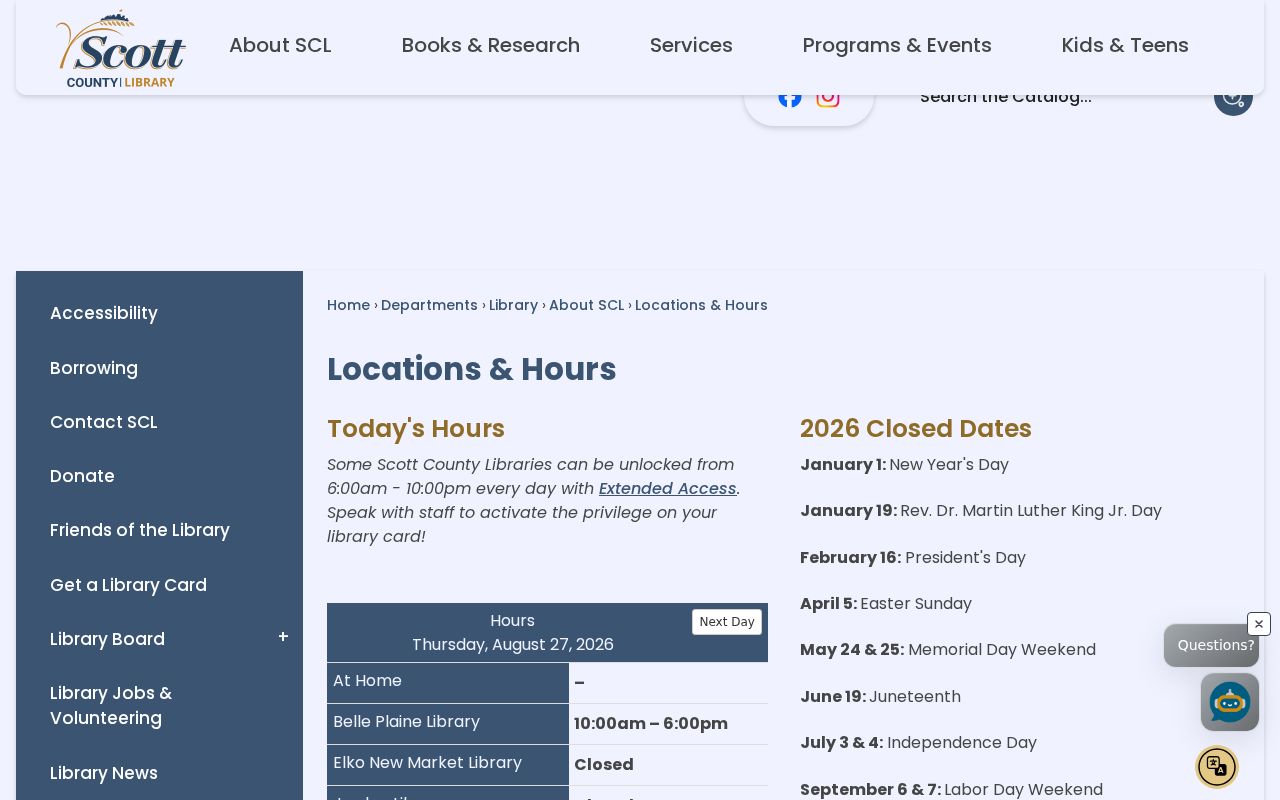
Prior Lake Library’s published information does not list exact directory years, so a focused question is better than a broad request. Ask about local-history vertical files, yearbooks, obituary searching, interlibrary loan, and any city, telephone, or rural directories by date.
The Society is at 235 Fuller St S in Shakopee and lists Tuesday through Friday and Saturday public hours, with an appointment recommended for particular archives or objects. Its distance-research process gives a workable alternative when the object or film cannot be viewed in person.
Prior Lake Newspaper Directory Substitutes
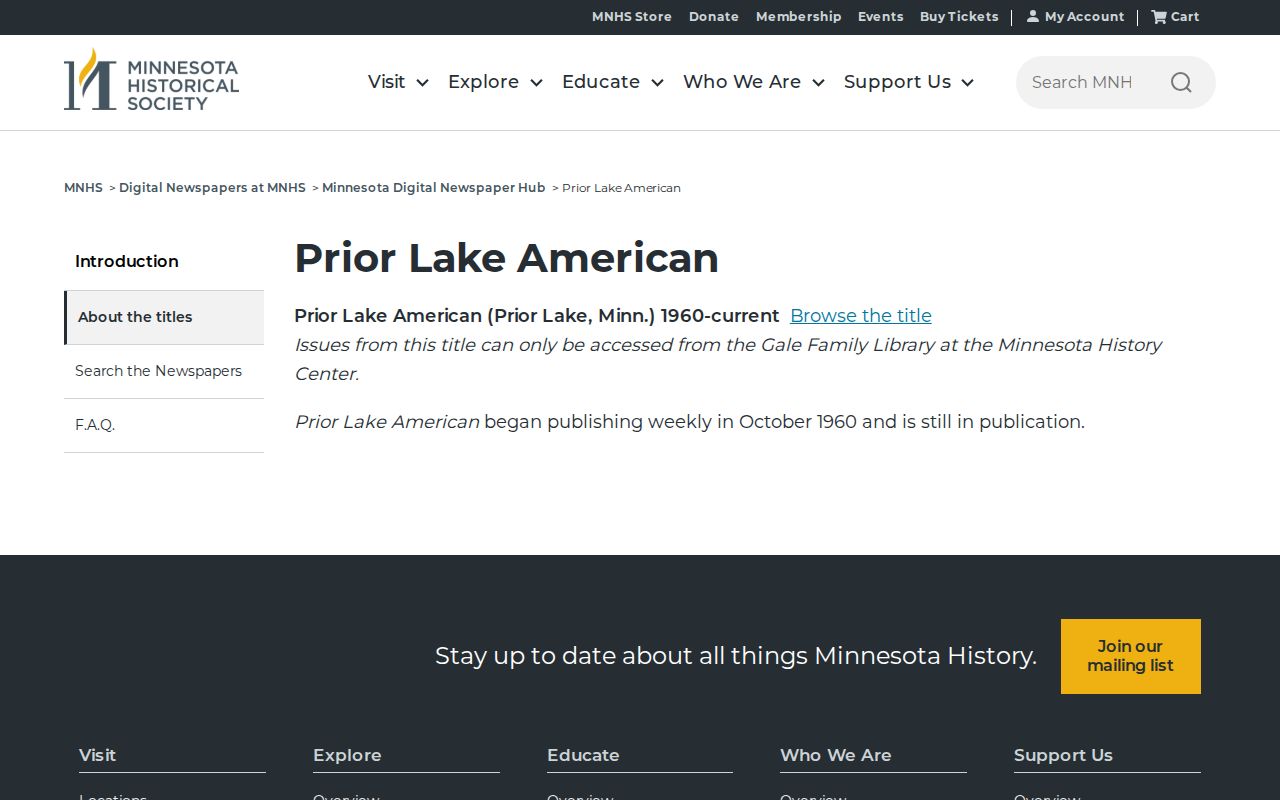
When no Prior Lake historical directory volume is located, the Prior Lake American can connect a person to a date, place, school, church, civic event, sale, obituary, wedding notice, or business advertisement. The newspaper began weekly publication in 1960 and continues. MNHS notes that most issues after 1977 are under copyright and available at the Gale Family Library under the applicable rules. The Historical Society microfilm route complements that access.
MNHS’s Prior Lake American record describes the newspaper run and the access limits that shape later research.
Use the newspaper as a dated public mention, not proof of a current address. Copy the exact wording, issue date, page, and surrounding context. Search initials, middle names, Spring Lake Village, a rural route, a lake or church name, and a business or school reference when the source era supports those terms.
Historical place clue. Before the 1871 railroad-era name change, a Prior Lake lead may appear under Spring Lake Village. Searching both names prevents a modern place label from hiding an earlier record.
Reading a Prior Lake Directory Entry
No located Prior Lake historical directory volume supports a reconstructed sample entry or a local abbreviation legend. If a volume is found, photograph its title page, publication date, and abbreviation key before transcribing a name. City and telephone directories can connect a person to a street address, a business or public role, and sometimes other household details. Each field should be copied as printed and tied to that edition’s date.
| Printed name | Copy initials, spelling, suffixes, and any alternate form exactly. Compare variants before joining records. |
|---|---|
| Street or place | Record the address, rural route, village, township, church, school, or business location exactly as the source gives it. |
| Household detail | Note a spouse, relative, or other household wording only when the volume actually prints it. |
| Business or public role | Keep the description as a time-stamped lead. Check advertisements and newspapers before drawing a personal conclusion. |
| Edition evidence | Save the title, date, page, repository, and whether the item was an index entry or an original image. |
- Criss-cross directory
- A directory arranged by street or address rather than by surname. No Prior Lake criss-cross run was confirmed in the research.
- Householder index
- A name-oriented finding aid to household entries. Its scope depends on the individual volume and should not be assumed.
- Abbreviation key
- The volume’s explanation of its shortened terms. Read it before interpreting a mark as a relationship, address, or role.
Prior Lake Directory Searches at MNHS
MNHS Gale Family Library and State Archives in St. Paul hold about 500,000 books and periodicals, including city directories, newspapers, maps, county histories, and genealogy resources. The published City Directory Search Request lets staff search one person or business in up to five years of one city’s city directories or telephone books for a $5 processing fee. It is a constrained request, which makes the name variants and date window important.
MNHS’s Gale Family Library and State Archives overview describes the directory, newspaper, map, history, and government-record collections available through this state-level repository.

Choose a narrow Prior Lake request rather than using St. Paul or Hennepin directory coverage as a substitute. The latter collections are useful in their own places but do not establish a Prior Lake address. MNHS People Search can also narrow historical leads by name, location, date, and record type, with coverage and transcription limits noted by the repository.
For a Prior Lake family question, pair a directory request with an independent record of the same period. MNHS People Search includes Minnesota census material, historical birth and death indexes, veterans’ graves, and other collections with their own stated coverage. A matching date, place, spelling, and family connection is stronger than a name alone. When those details conflict, retain the differing entries and return to the original image or the county source.
Prior Lake Directory Clues in Images
Minnesota Digital Library’s Prior Lake-filtered material is a useful index to place names when a historical directory is missing. The located results include 1905-1915 Grainwood Hotel and boathouse postcards, 1912 boating images, a 1905-1915 public-school postcard, a 1953 Prior Lake High School class photograph, a 1930s portrait identified as Mable Nybloom, and a 1939-40 George Farrell John Deere dealership image later associated with the Del Busse garage, sign company, and Prior Lake Library.
Those images can supply a building name, date range, contributor, local business name, or precise search phrase. Record the object title, identifier, rights note, date range, and physical-location wording. Then search the same terms in Prior Lake American microfilm and Historical Society subject files. An image is not a city directory entry, and a caption does not establish a current address or a complete household record.
Image-to-directory method. Use a caption’s exact business, hotel, school, or lake wording as a newspaper and archive search term. Preserve the collection date range rather than converting it into an exact date.
Trace a Prior Lake Directory Lead
Build a Prior Lake family trail from the first dated mention rather than from an assumed directory run. A church register, obituary card, cemetery map, census entry, plat, or newspaper notice can bridge a missing book. The Historical Society’s cemetery and church material is especially useful when a name leaves the current record trail. Keep the record type and date beside every address so a historical mention is not turned into a present-day claim.
- Search the name, initials, and spelling variants in Prior Lake newspaper, Historical Society, MNHS, cemetery, church, and census material.
- Write down each dated street, rural route, business, church, school, township, or village reference exactly as printed.
- For a land clue, compare the date with the legal description, parcel information, deed index, and plat rather than relying on a current taxpayer display.
- Search Spring Lake Village as well as Prior Lake when the record may predate the 1871 naming context.
- Close gaps with obituary cards, church registers, cemetery plots, maps, and the next independent dated record.
A disappearance may mean a move, death, a changed spelling, a changed place label, or simply that the repository has no item for that year. Preserve the gap. For a house-centered sequence, use the separate Prior Lake previous residents search to compare the address with deeds, plats, permits, and date-stamped local history.